The Gods of Ancipsei are split into two domains; the Domain of Order and the Domain of Chaos. Gods within each domain are often interpreted differently, with more emphasis of certain aspects of their rule, and sometimes even being given different names based on the culture that worships them. The Gods each have their own domain outside of the material plane, but they are only reachable with the blessing of the God you are trying to reach. Certain creatures, such as clerics, paladins, or the Fey, are bestowed some degree of control over a certain God's aspect in exchange for servitude.

Gods of Order

- Win the war, not the battle -

Imperium, the God of Control

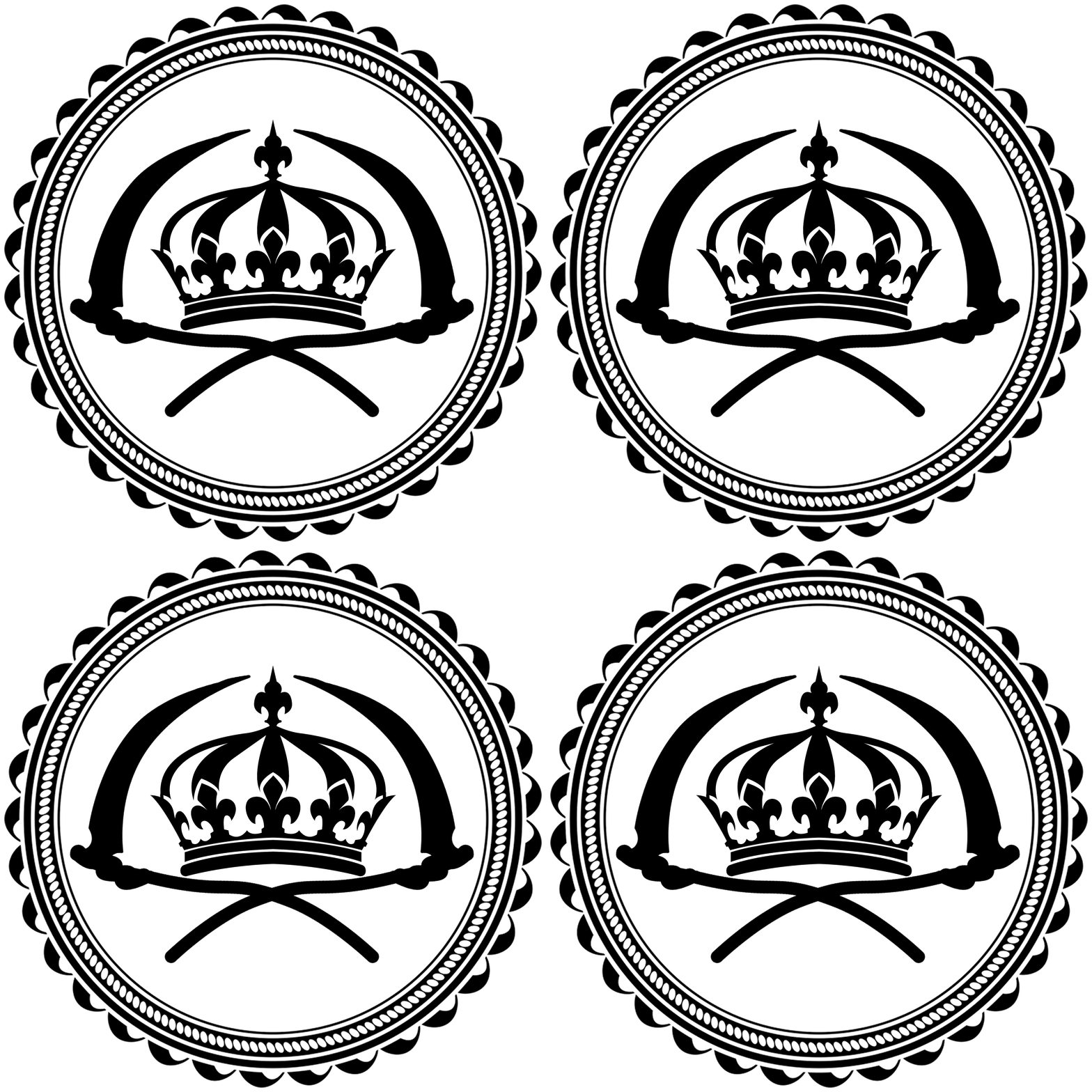
Imperium is the god with the strongest essence of Order. Aspects within his sphere are (1) Power, (2) Harvest, and (3) Rule. Due to his influence over politics and law, but also harvest, he is widely worshipped by the powerful human kingdoms of Ealdagen, Axumor, and Deluvant. His influence permeates from the humble farmer to the nobility.

Depending on which aspect is the focus of worship, he is often with symbols of the crown, balancing books, and a wheat field. The scythe and the crown as often used as symbols of faith for his followers.

Eon, the Goddess of Time

Eon presides over the aspects of (1) Permanance, (2) Endings and Beginnings, and (3) Death and Decay. While her third aspect warrants widespread worship from priests across multiple cultures, her first two aspects are less far-reaching. The elves of Ryalun and the tieflings in the Spines of Xyziul are often worshippers of Eon, and her worshippers can sometimes be found in small pockets of areas of strife and uncertainty, such as in Earenkedar.

She is often depicted veiled, as if in mourning, with the presence of a clock or hourglass, which are also often carried as a symbol of faith.

Zircon, the God of Earth

Zircon's domain is varied. He presides over (1) stones, gems, and minerals, the precious resources found within the Earth. However, he is also the god of (2) Hearth and Stability, and (3) Roads and Leylines. His two aspects make him the most ubiquitously worshipped god for dwarves and halflings, but the focus on aspects changes between the two races. He also has some followers in Ixen, as he is a popular god among travelers.

He is often depicted as statuesque, sometimes with mapped roads carved into his skin. His worshippers are known to carry a carved rock or precious stone as a symbol of their faith.

Gods of Chaos

- Let the forces flow -

Flux, the Goddess of Change

Flux is the goddess with the largest essence of Chaos. However, she is not as widely worshipped as she once was, having been somewhat forgotten with the development of civilisation, technology, and magic. She is most worshipped currently for her aspects of (1) Weather, and (2) The Sea and The Tides. Her worshippers for these aspects can be found in areas with strong elemental influence, such as Darastrix, Nothok, and the Rozhal Isles. She is also widely worshipped by sailors, fishermen, and ocean dwellers from around Ancipsei. However, her third aspect, (3) Energy, is often overlooked. Some elven scholars in Lan'Quessir still hold this knowledge in their religion. Somewhat unexpectedly, there has been an re-remembering of Flux and her domain over shifting energy fields with the advent of technology and artificing. Some gnomes and goblins have found faith in Flux, and are guided by her in their invention process.

Flux is often depicted as made of clouds or waves, with symbols associated with water. However, more recently, some have begun using lightning as their symbol of faith.

Elan, the God of Growth

Elan presides over the aspects of (1) Nature and Beasts, (2) Disease, and (3) Life. Through the first aspect, his worshippers can be found in druids and hunters in Nothok, Earenkedar, and north Axumor. His second and third aspects draws the worship of healers throughout all of Ancipsei, including a particular interest from the elves of Lan'Quessir, who often attribute their long lifespans to his blessing. He is also heavily connected to the Fey in Ancipsei.

He is depicted as a a being of plant and moss, often with more animalistic than humanoid features. His worshippers often use the plant sprig as a symbol of faith.

Emitre, the God of Light

Emitre is a polemic deity, with heavy theological argumentation between cultures over his dominant aspect. He presides over (1) Heavenly Bodies, (2) Fire, and (3) Enlightenment. His first aspect has created sects of passionate worshippers in Deluvant and Axumor, as well as in groups of druids and oracles throughout Ancipsei who are guided by the sun, moon, and stars. His second aspect is often worshipped by the dwarves in Barakbrok, as well as many in Darastrix and the Spines of Xyziul. Advocates for the importance of his final aspect are Aarakocra scholars in the Khy'Aki territories, as well as theologically-oriened academics throughout Ancipsei. The uniting thread between all of his scattered worshippers is their fervour in belief.

Despite the variety in his depictions, he is always shown with bright light shining from his eyes, and often halo'd. His worshippers tend to use the sun, moon, and stars as symbols of faith.

Yen, the Goddess of Desire

Although not everyone worships Yen actively, her followers say that all people in Ancipsei hold Yen in their heart. Yen presides over the aspects of (1) Love, (2) Luck and Fortune, and (3) Hunger. Followers of Yen can be found in small numbers throughout Ancipsei, but tend to congregate in Ixen. If you've yearned, you've worshipped her. If you've hoped, you've worshipped her. If you've hungered, you've worshipped her. She is everywhere, and she will never be sated.

She is often depicted as a beautiful woman drowned in gold and jewels, either with no hands, or many. Her worshippers often carry a golden flower as a symbol of their faith.